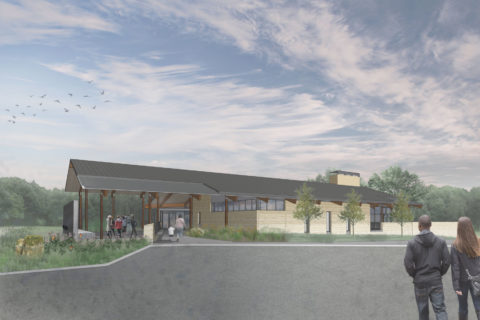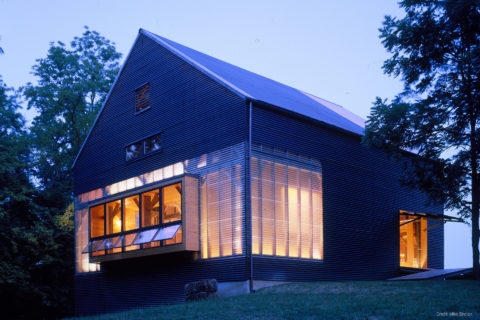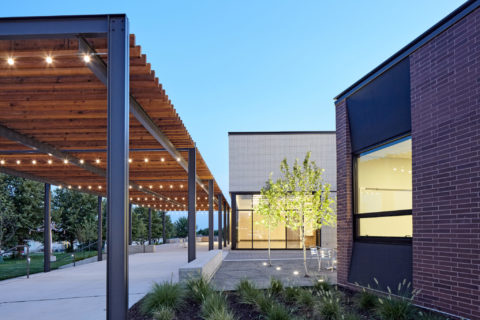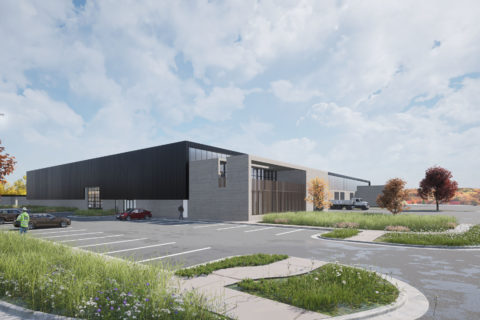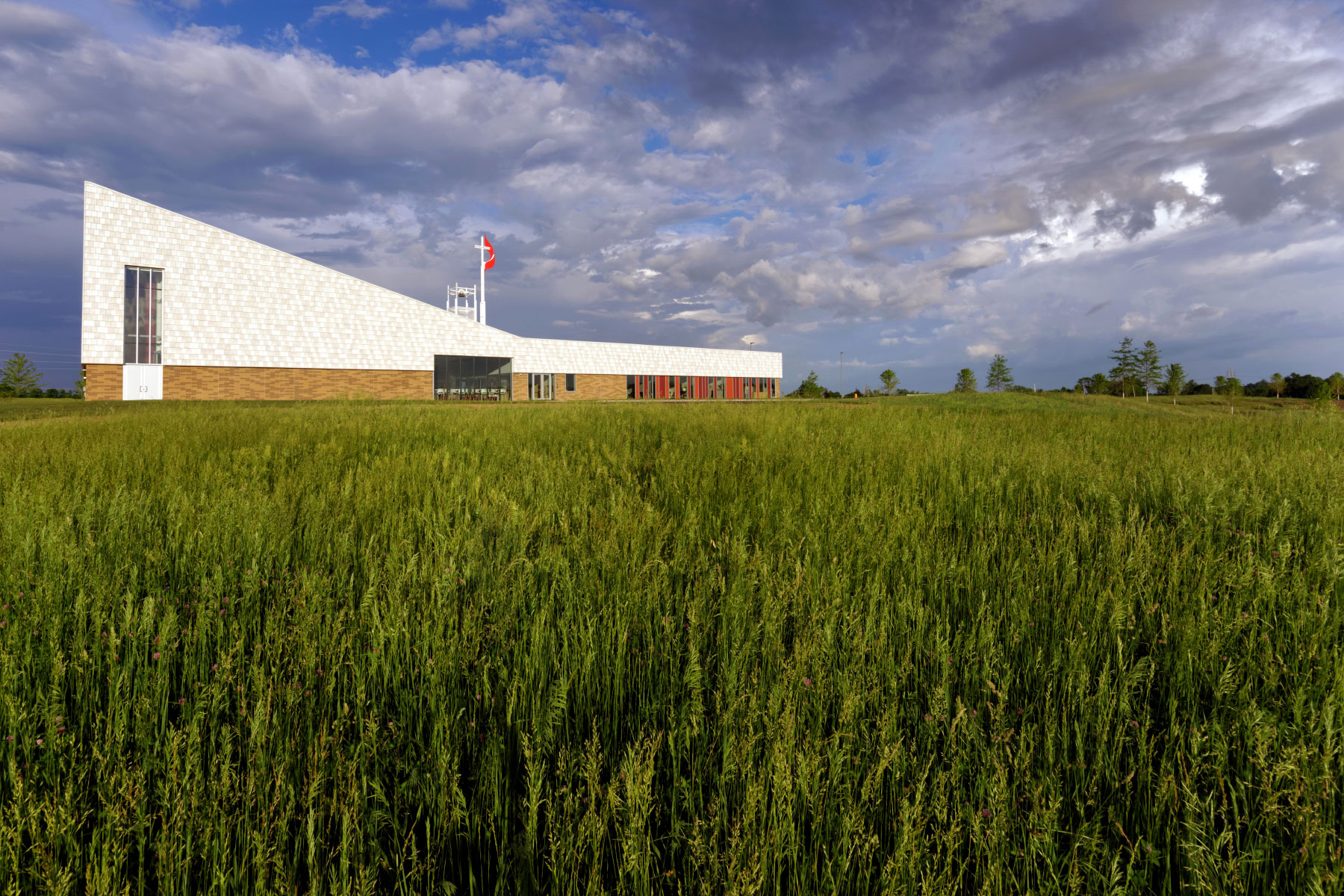
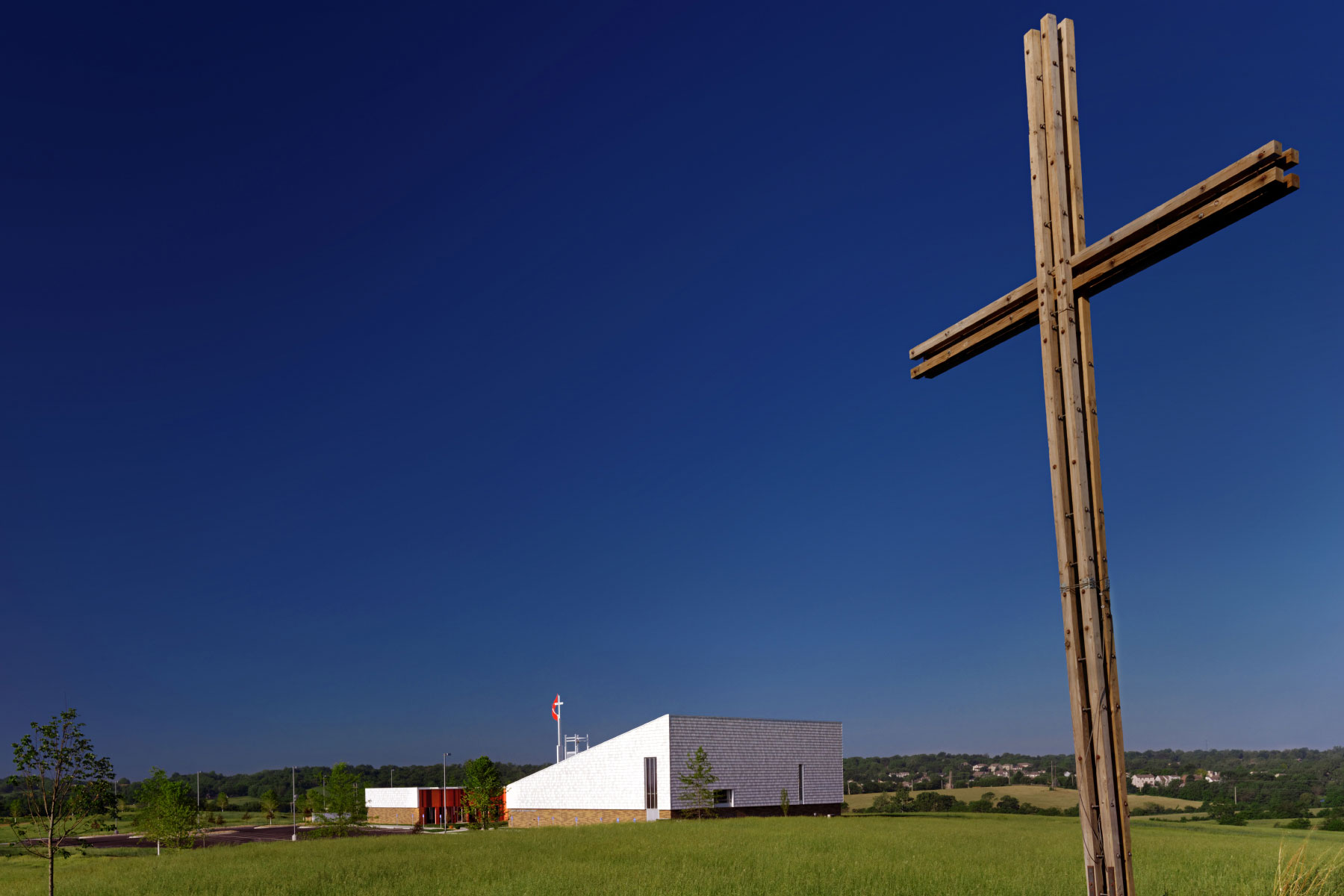
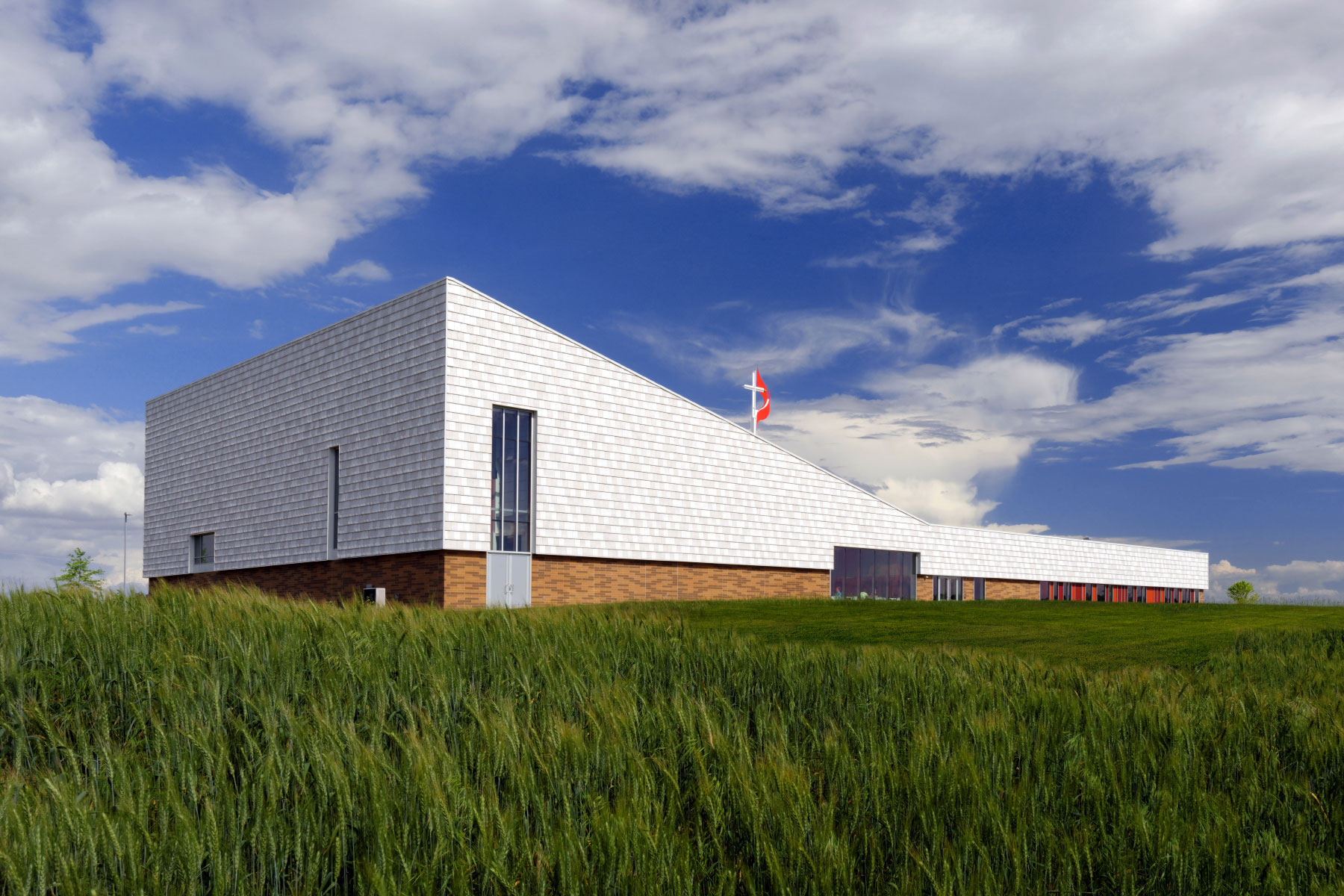
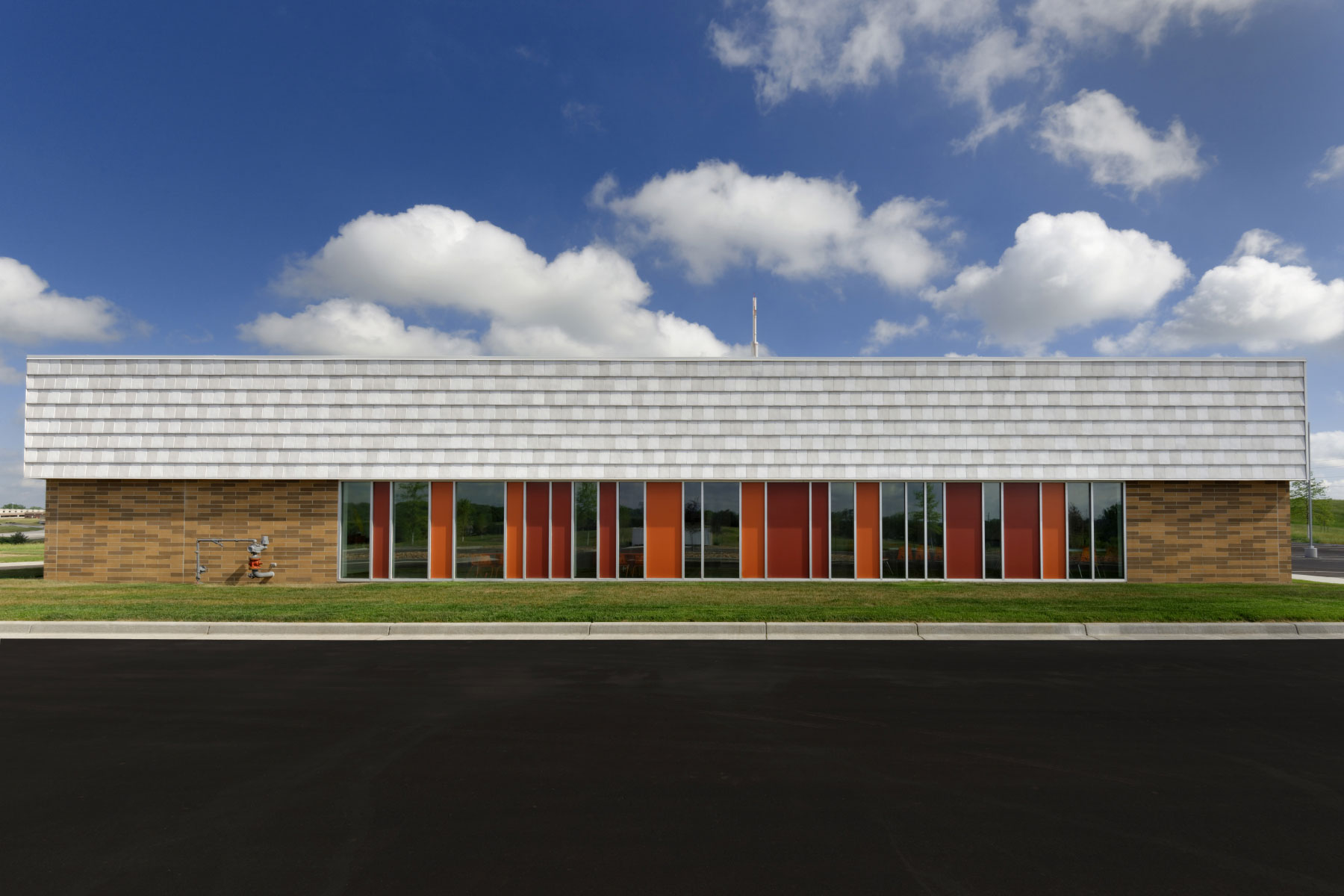
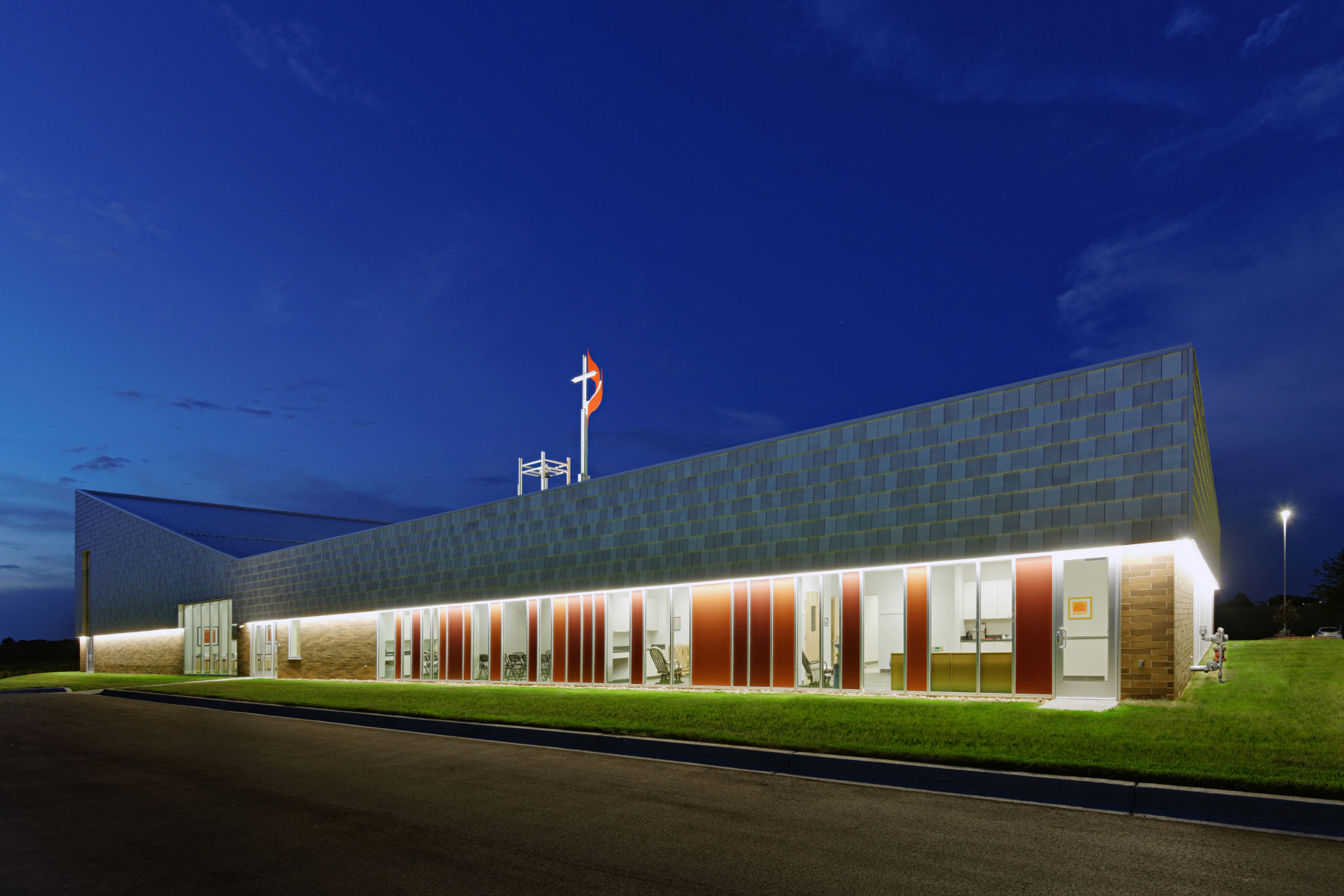
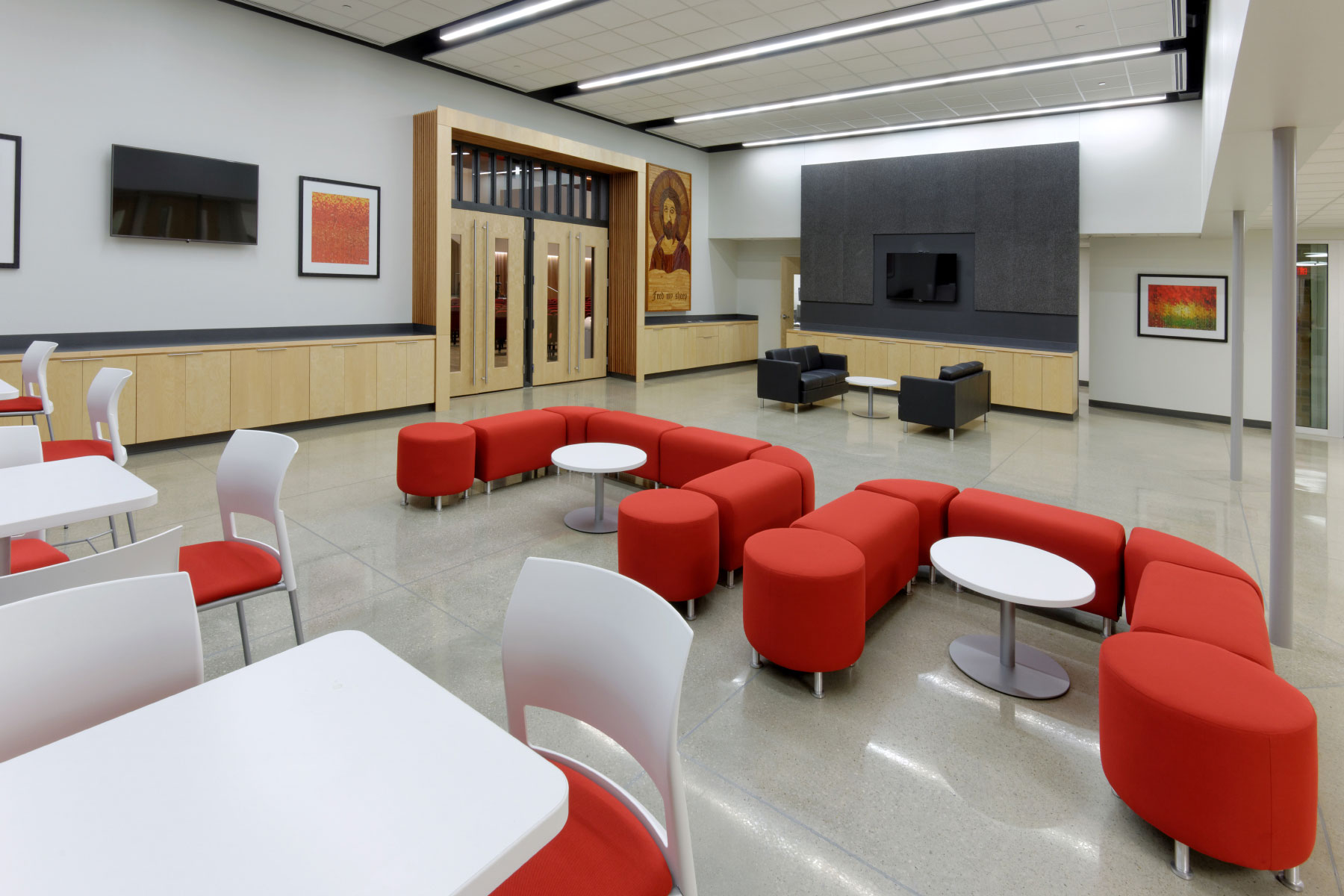
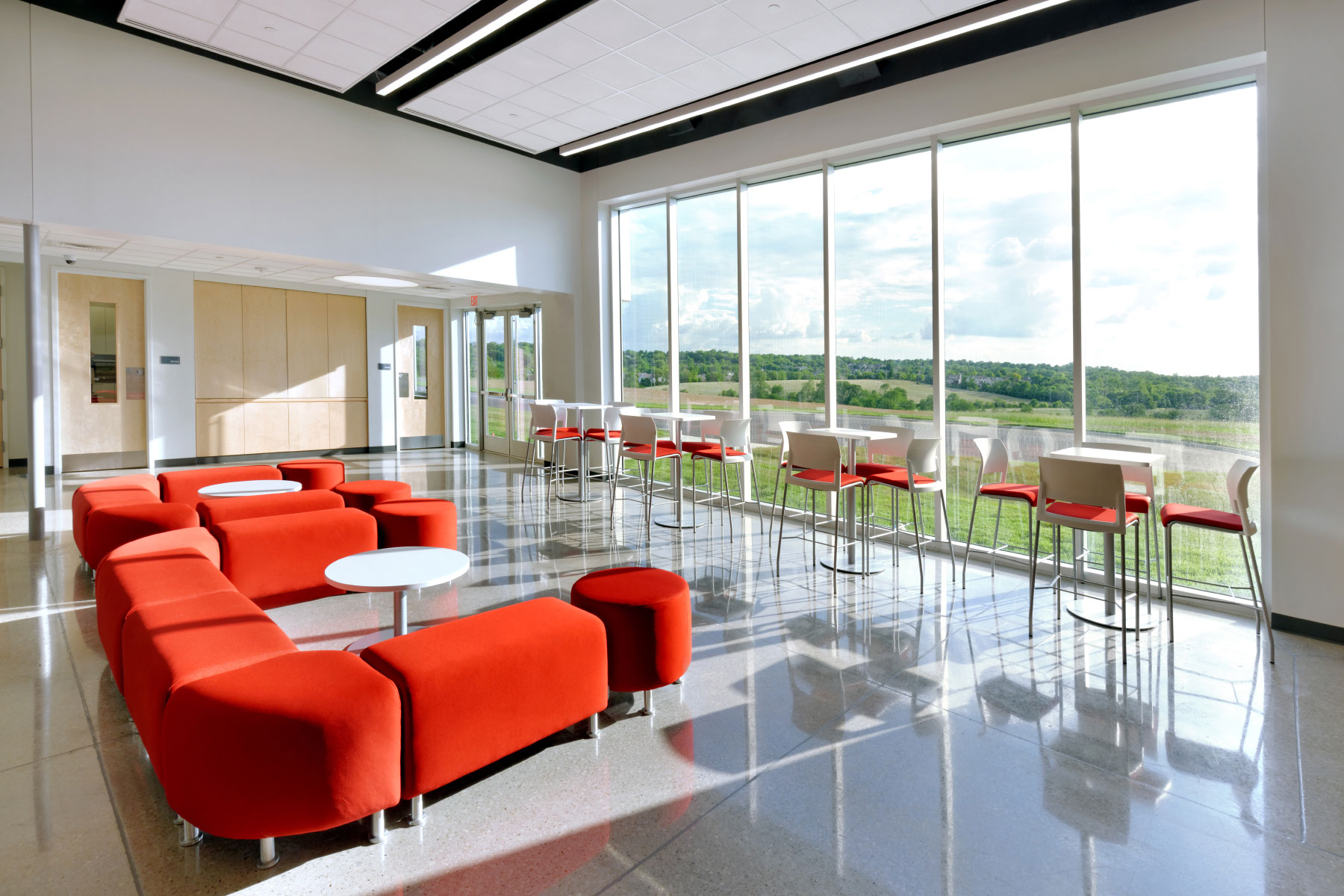
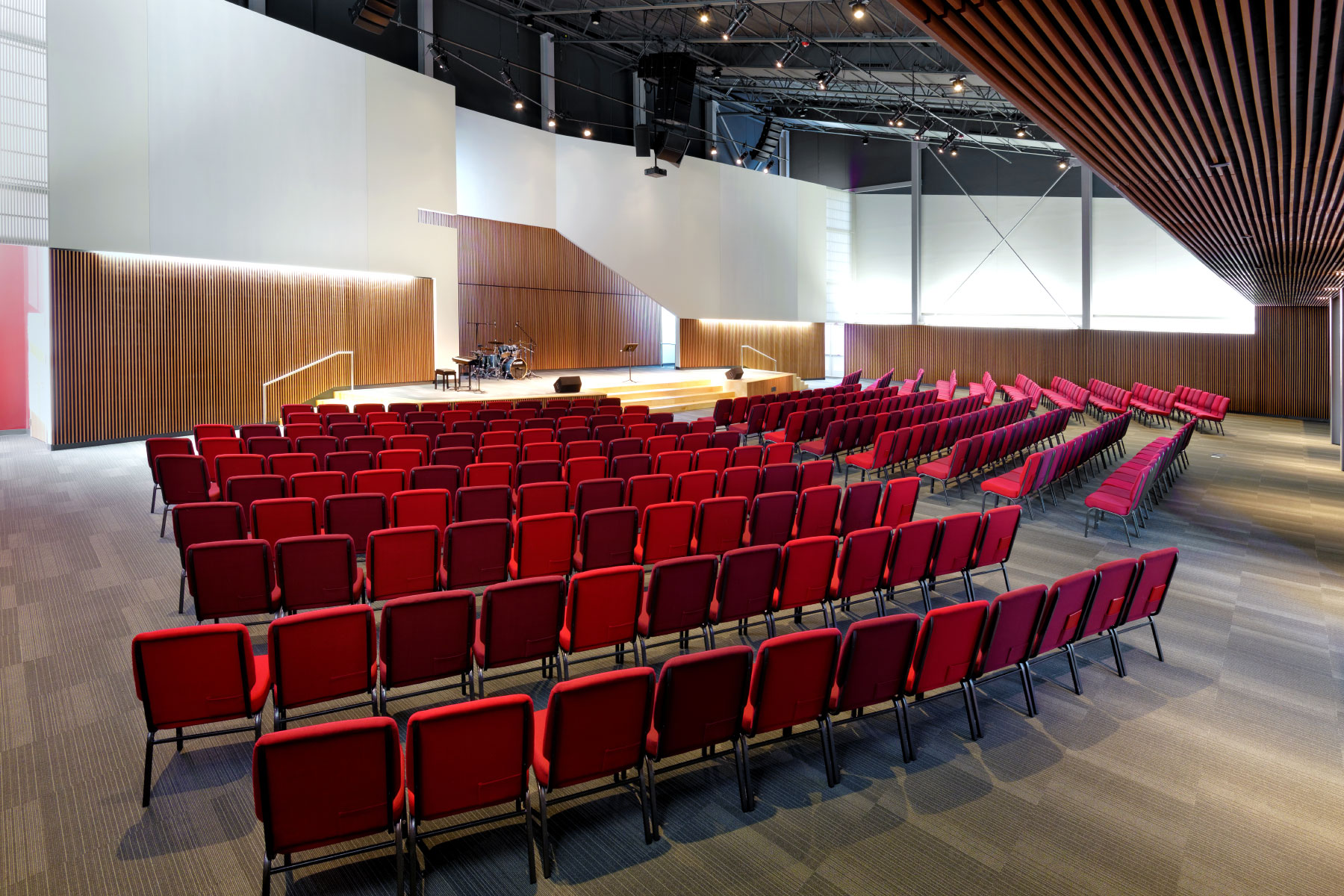
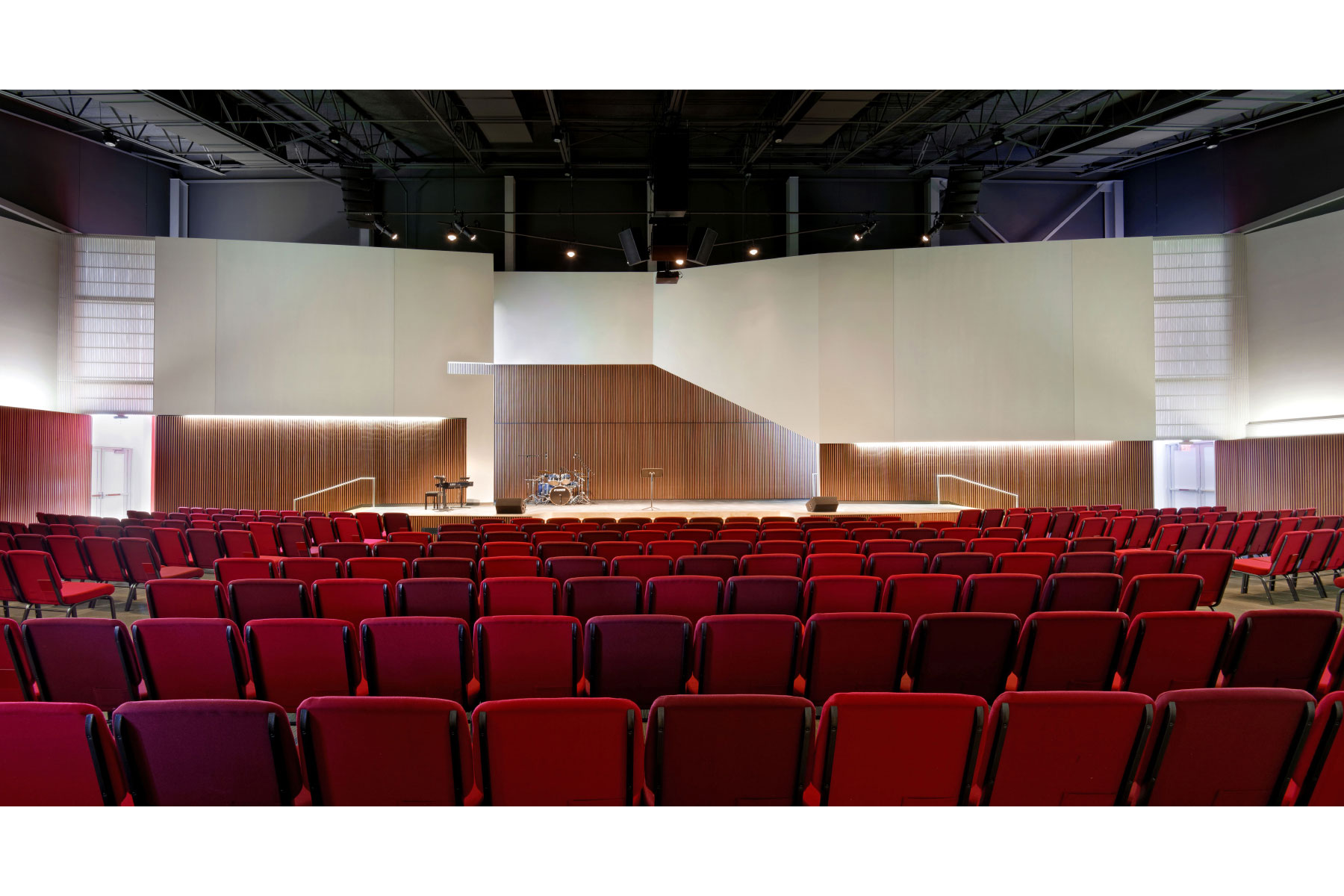
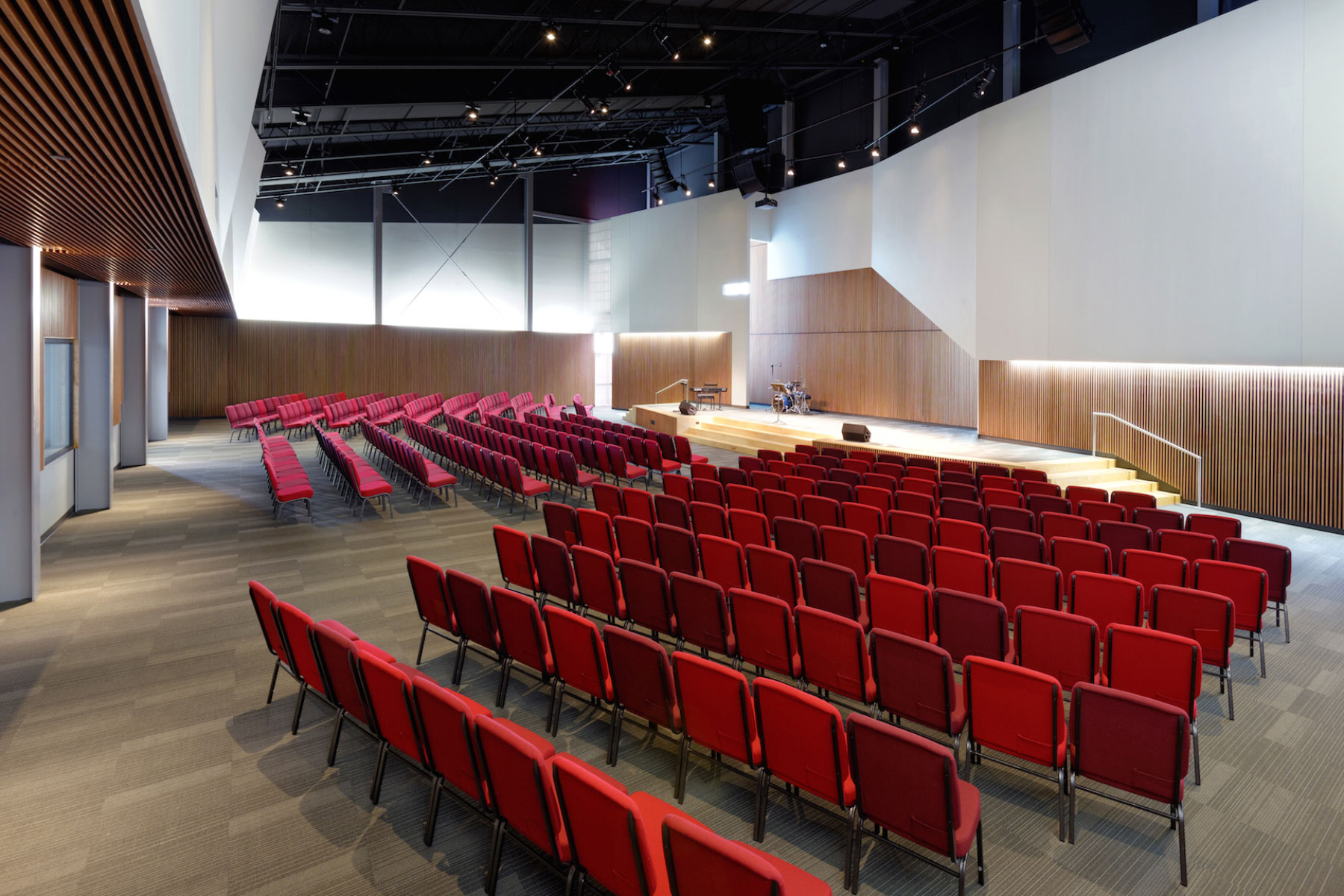
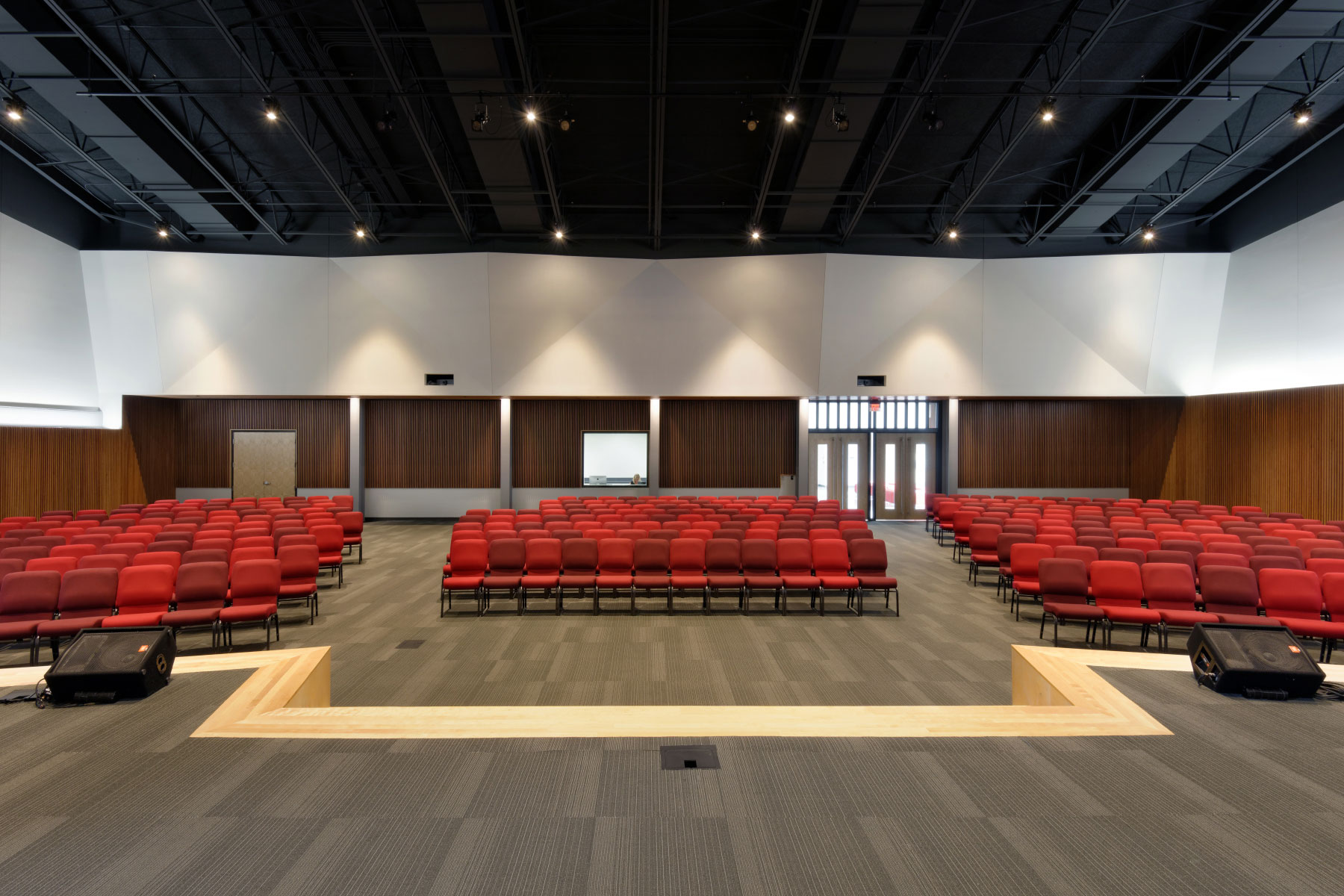
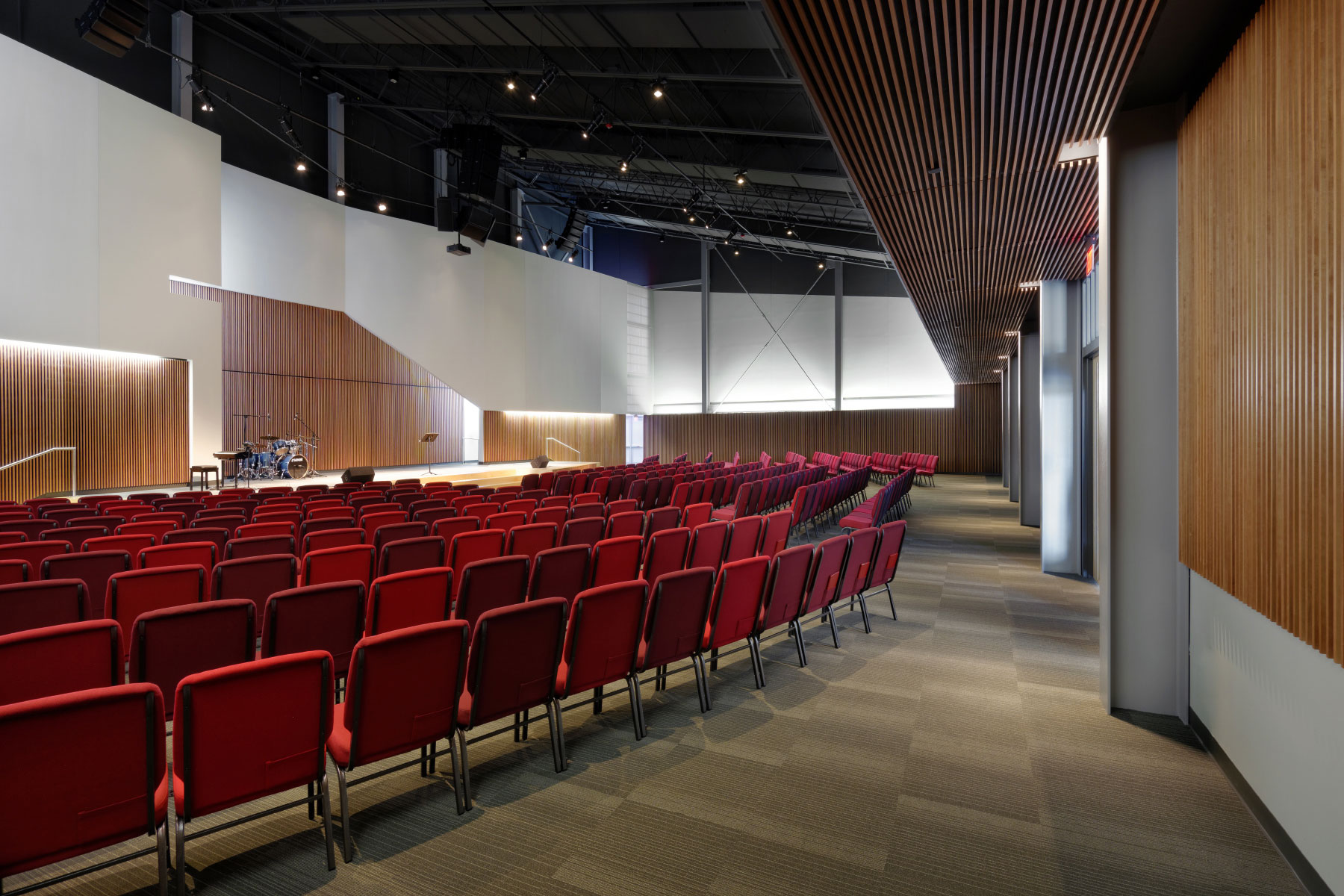
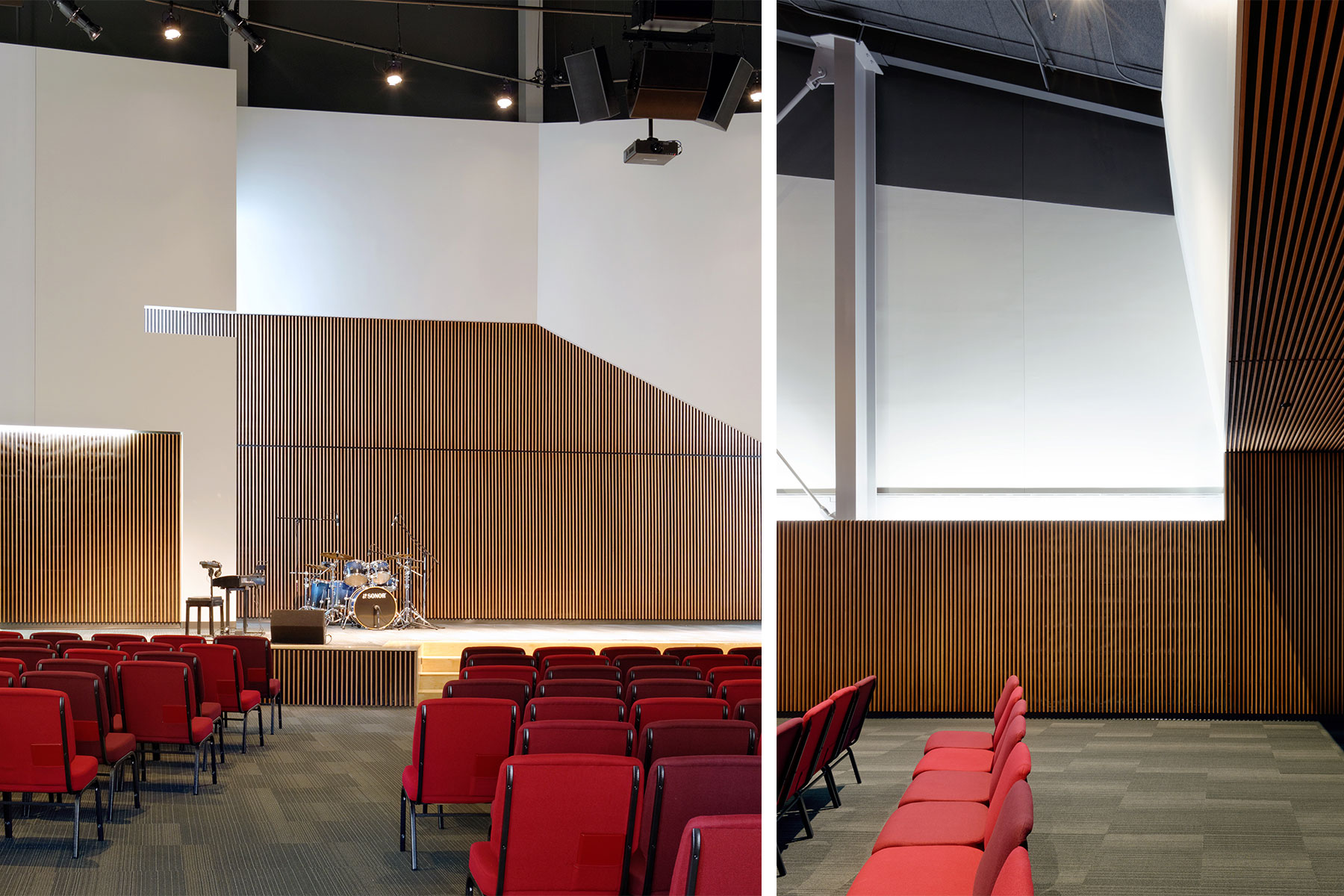
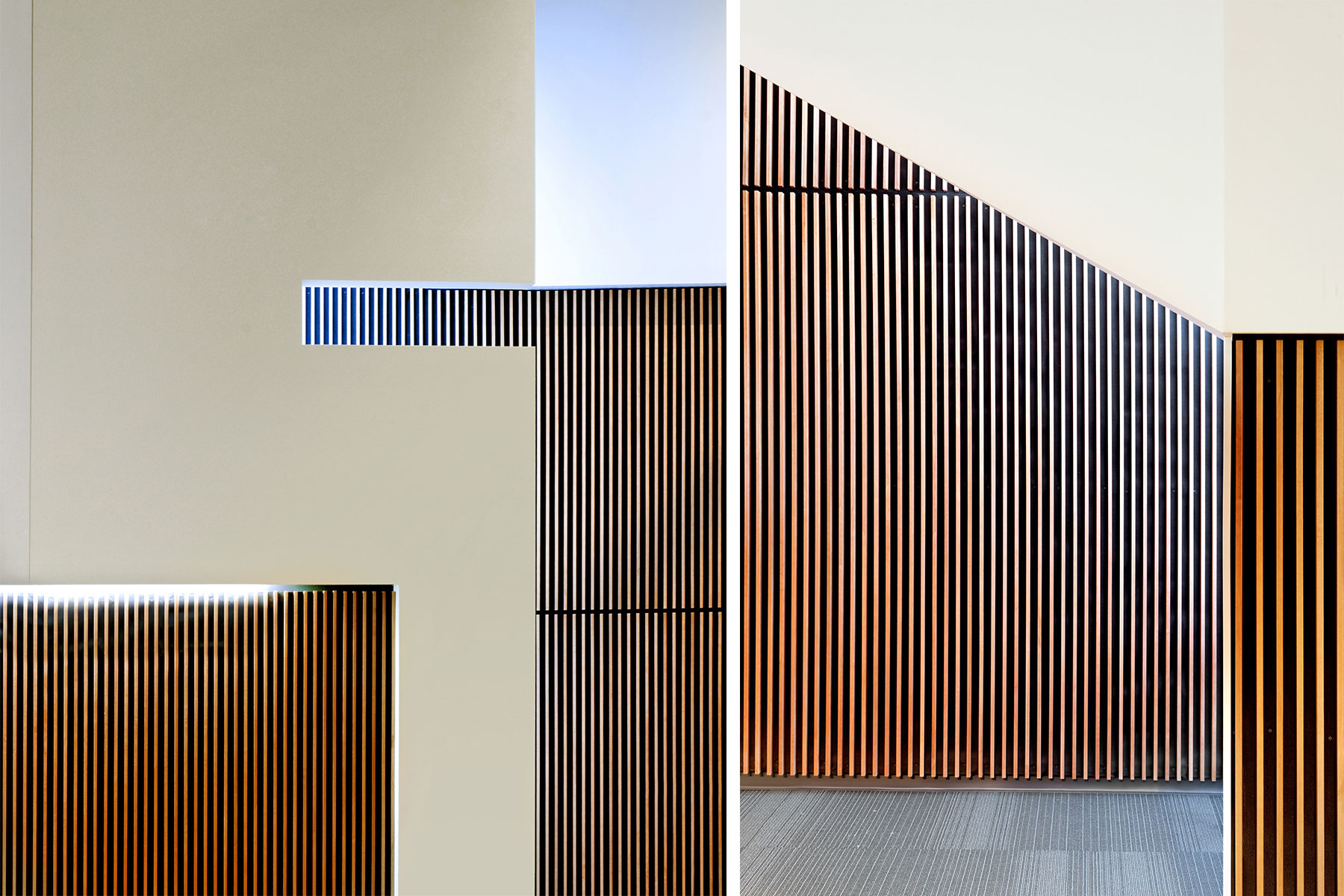
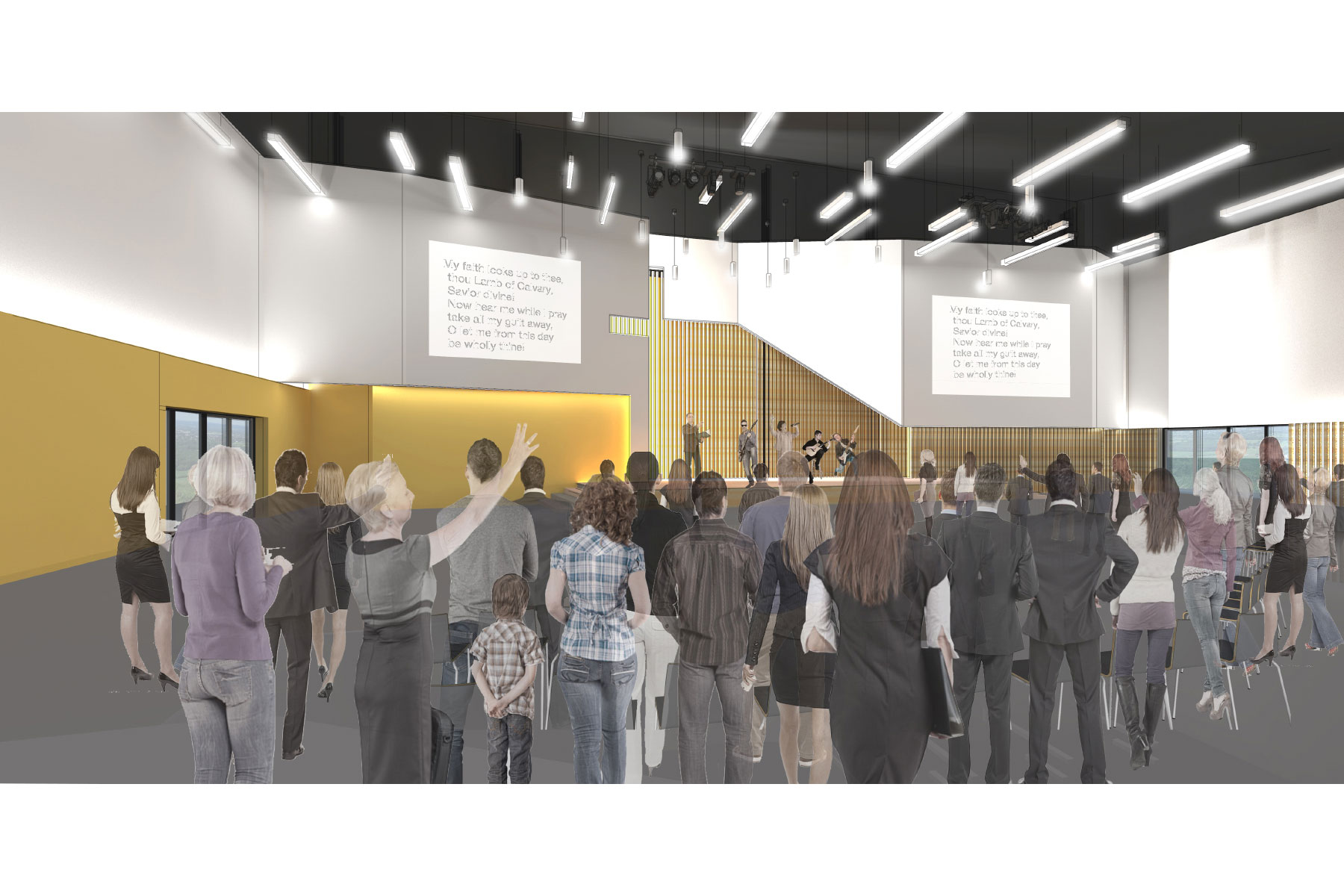
Working with numerous volunteer leaders and church staff, Dake Wells Architecture led a nearly decade-long visioning, planning, and design process that resulted in Liberty United Methodist Church establishing a second church campus to support its mission and ministry. With a long history in the heart of Liberty, Missouri, LUMC had outgrown its current campus on a prominent hilltop in the city. At 18,000 square feet, this project represents the first phase of a planned 32-acre campus that supports and encourages the growth of the church membership. With an emphasis on serving young families, the project provides a new flexible, but materially rich worship space combined with classrooms for children and adults. The central gathering space provides generous spaces for building personal relationships while framing views of the nearby hospital, senior housing, and residential neighborhoods. This framing of views is intended to remind the church of its ultimate mission to serve its community in meaningful ways.
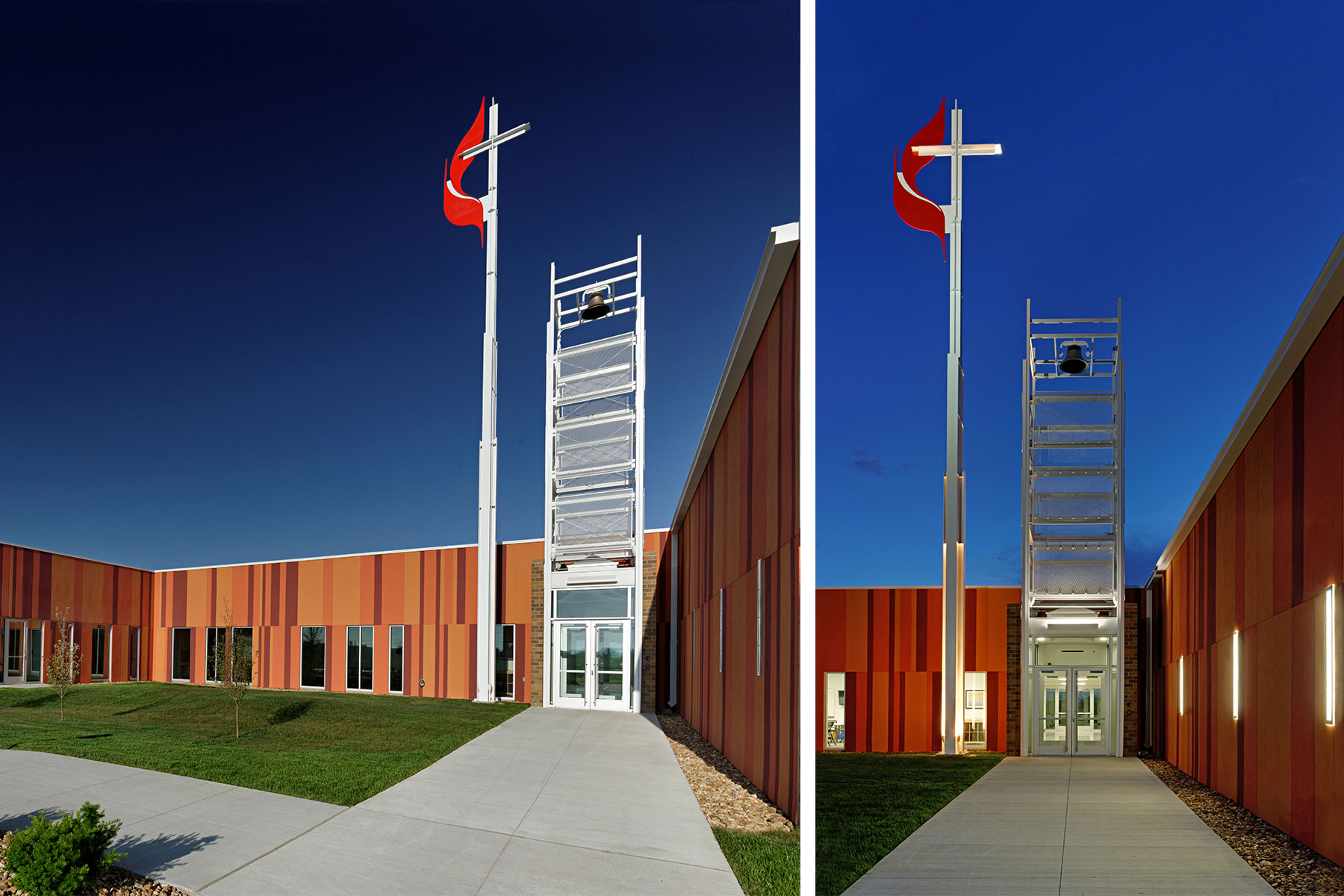
Liberty United Methodist Church has a strong history filled with tradition and symbolism, not the least of which is the Cross and Flame.
“The insignia is rich in meaning. It relates The United Methodist church to God through Christ (cross) and the Holy Spirit (flame). The flame is a reminder of Pentecost when witnesses were unified by the power of the Holy Spirit and saw “tongues, as of fire” (Acts 2:3). The elements of the emblem also remind us of a transforming moment in the life of Methodist founder, John Wesley, when he sensed God’s presence and felt his heart “strangely warmed.” -www.umc.org
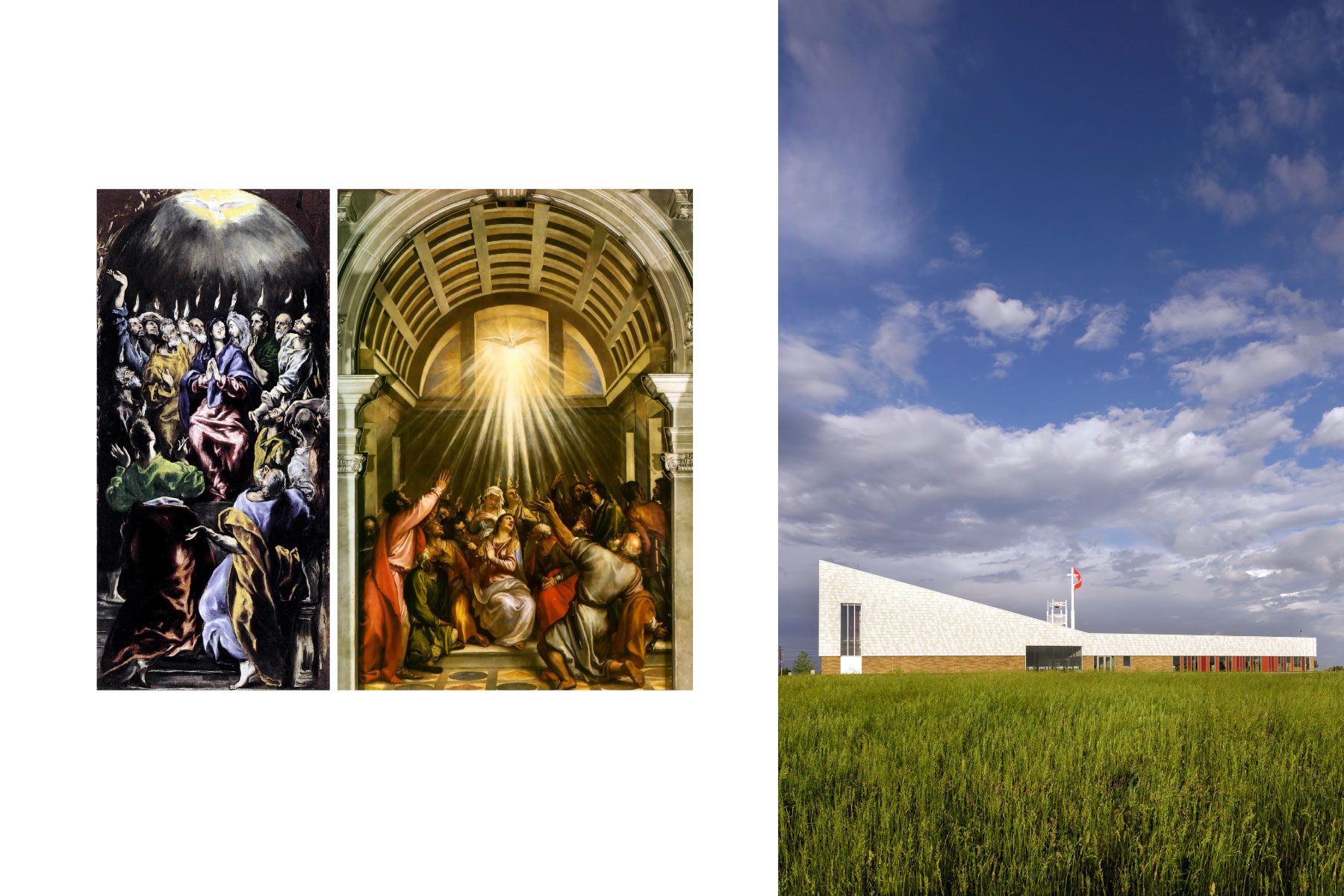
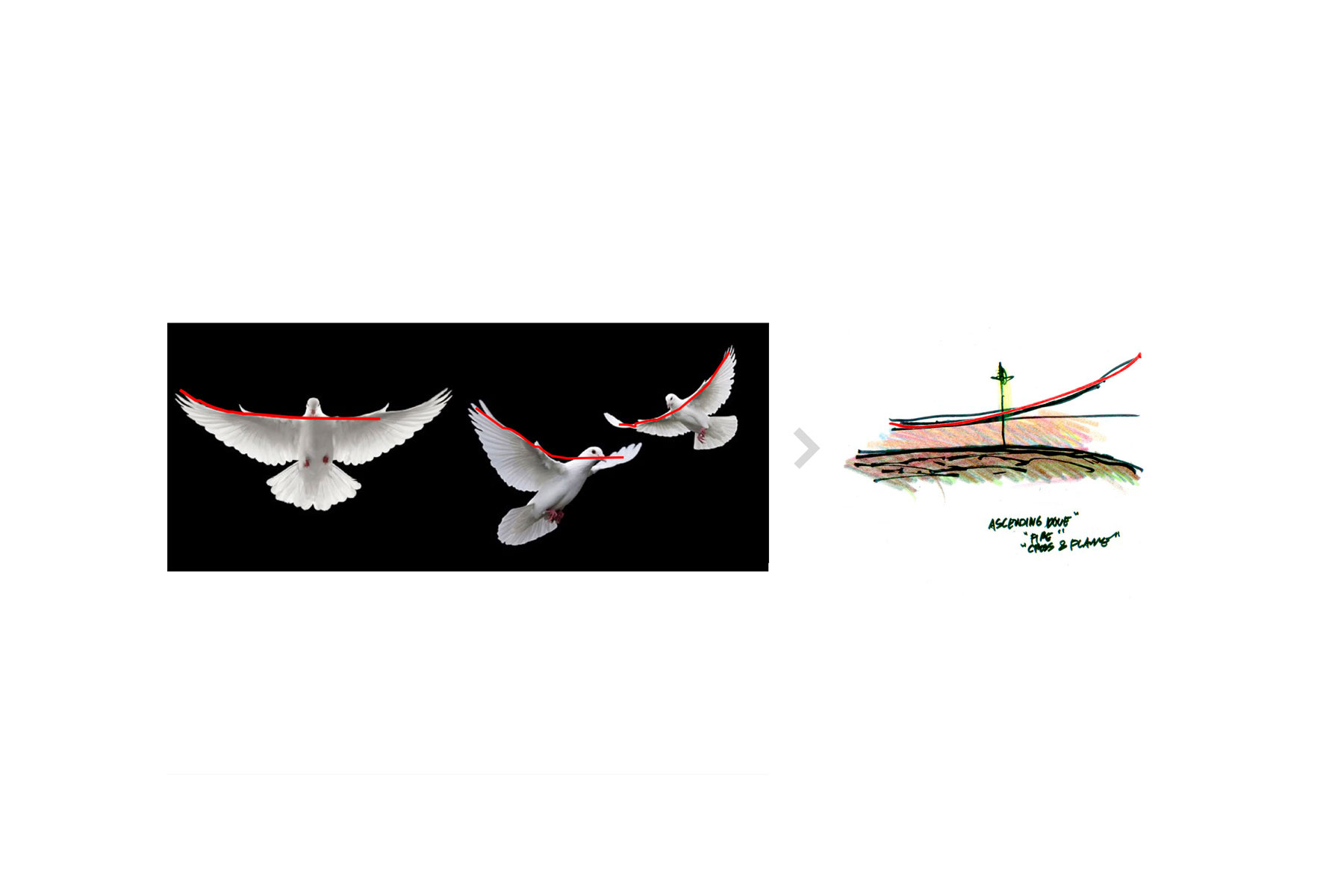
Renaissance paintings by El Greco and Titian depict Pentecost and represent the Holy Spirit as a descending dove with wings outstretched. Elements of fire fall from heaven to the people on earth below. These depictions provided the inspiration for the design of Liberty United Methodist Church. Each material, texture, and color not only enclosed the building’s interior but tells the story of Pentecost.
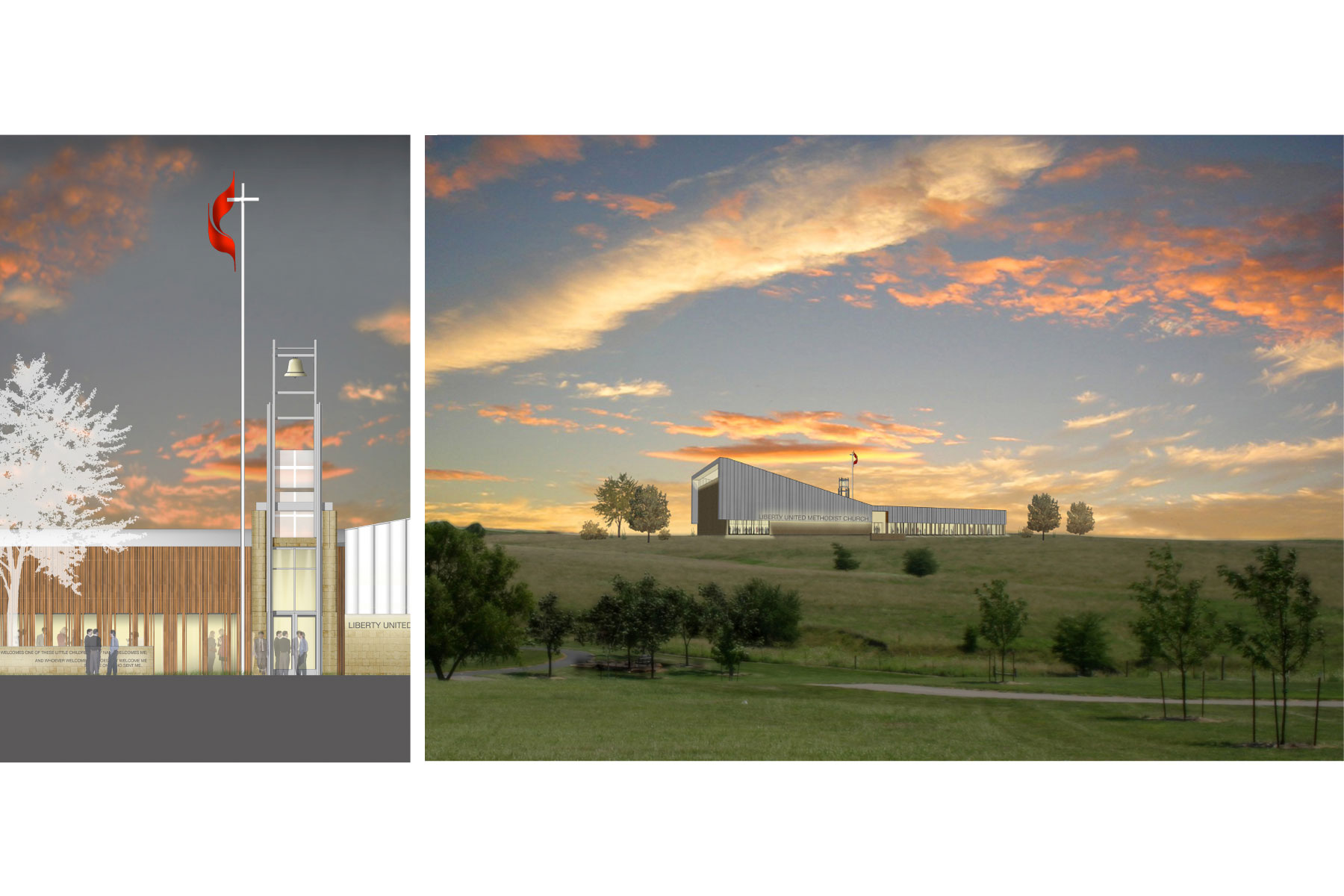
White terracotta shingles clad the upper portion of the building exterior representing the upswept wings of a dove. The white shingles never touch the ground; instead, they hover above layers of masonry, symbolic of earth, and at times, colors of red and orange, which represent elements of fire from the Holy Spirit. In the entry court, the colors are most vibrant as one enters the building below the Methodist insignia and the historic bell from LUMC’s original church building.
Our hope is that all those that choose to visit Liberty United Methodist Church experience the power and grace of the Holy Spirit through those people that call LUMC their home. And we hope that they too will find their heart “strangely warmed” by the experience.
Hammons School of Architecture Alumni Honor Award
Associated General Contractors of America (Kansas City Chapter) Building of the Year
AIA Central States, Merit Award
Faith & Form Magazine and The Interfaith Forum on Religion, Religious Architecture Award
Interior Design, Best of Year Award, Honoree
AIA/IFRAA Award for Religious Art and Architecture